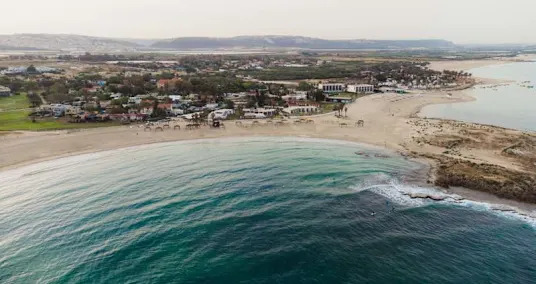
The discovery was made in an ancient shipwreck in the Dor Lagoon near the Carmel Coast, where archaeologists recovered nine pieces of unprocessed iron known as “blooms.”
Researchers from the University of Haifa said Wednesday that an underwater excavation off Israel’s northern Mediterranean coast uncovered what they described as the earliest known cargo of raw iron transported by ship, dating back around 2,600 years, Xinhua reported.
The discovery was made in an ancient shipwreck in the Dor Lagoon near the Carmel Coast, where archaeologists recovered nine pieces of unprocessed iron known as “blooms.” According to the university, the find provides direct evidence of how iron was transported in its earliest commercial stages.
The material was preserved in its original form, having solidified directly in a smelting furnace without undergoing forging or further refinement. Researchers said this distinguishes the cargo from later iron artifacts that typically show signs of shaping or tool-making.
Unlike copper and bronze, which could be melted into liquid form in ancient production processes, iron was heated with charcoal to produce a solid, porous mass. That mass was generally hammered to remove impurities and create denser material suitable for tools and implements.
The recovered blooms showed no indication of that secondary processing stage, suggesting they were transported immediately after production.

Earliest iron shipment discovered in ancient Mediterranean wreck
To determine the age and condition of the cargo, researchers conducted microscopic and chemical analyses.
Radiocarbon dating was also carried out on charred wood embedded in one of the pieces, helping confirm the timeline of the shipment. The findings were published in the journal Heritage Science.
Researchers said the cargo indicates that iron was being moved in raw form from production sites to other locations for further processing, pointing to a level of specialization in ancient manufacturing and trade networks in the Mediterranean.
The University of Haifa said the discovery provides new insight into early iron production and distribution practices in the region.
LATEST POSTS
- 1
 Highlight Correlation of Microsoft Surface Book and Surface Genius Workstations for Determination
 - 2New York to require social media platforms to display mental health warnings
- 3Full SNAP benefits must be paid ‘promptly,’ USDA tells states as government reopens
- 4Astronomer captures 2 meteors slamming into the moon (video)
- 5Earth's newfound 'episodic-squishy lid' may guide our search for habitable worlds



- Exploiting Unsold Rams: May Be Less expensive Than You Suspect
- Sexual violence part of 'everyday life' in parts of Sudan, charity says
- See the moon shine with Saturn in the southern sky after sunset Dec. 26
- Survey: Protected And Versatile Men's Razor
- Novo and Lilly cut prices of weight-loss drugs in China
- Malaysian broadcaster rejects altered graphic about electricity rate hike
- Vote in favor of the bloom plan that adds a bit of excellence to your life!
- Tatiana Schlossberg, JFK's granddaughter, dies at 35 after terminal cancer diagnosis
- The Strait of Hormuz Isn’t Just an Oil Problem, It’s Now a Food Problem