MOSCOW (Reuters) -A Russian Soyuz MS-28 spacecraft with two Russian cosmonauts and one NASA astronaut on board successfully docked with the International Space Station on Thursday, Russian space agency Roscosmos said.
But the agency later reported that the launch pad at the Baikonur Cosmodrome in Kazakhstan had sustained damage from the launch. It said the damage would be quickly repaired.
The Soyuz 2.1a rocket lifted off from the Baikonur Cosmodrome at 12:28 p.m. Moscow time (0928 GMT).
Late on Thursday, Russian news agencies quoted Roscosmos as saying the launch had taken place without incident, but damage was observed after an inspection of the launch area.
"Damage to a number of elements of the launch pad was detected. An assessment of the state of the launch complex is being conducted now," the agencies quoted Roscosmos as saying.
"All the necessary reserve elements are there to restore it and the damage will be eliminated very soon."
It said the crew was on board the station and in good health.
(Reporting by Anastasia Lyrchikova; Writing by Marina Bobrova; Editing by Andrew Osborn, Ron Popeski and Bill Berkrot)
LATEST POSTS
- 1
 Change Your Home into an Exercise center with These Famous Wellness Gadgets
 - 2Doctor's orders: Eat ice cream, and other tips for a long and healthy life
- 3India’s delayed climate plan sets modest emission target
- 4Why don’t humans have hair all over their bodies? A biologist explains our lack of fur
- 5Discovering a sense of harmony: Individual Accounts of Reflection and Care





- Inflammatory Merz remarks on migrants' violence against women slammed
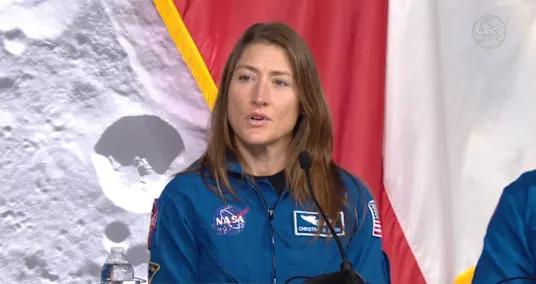
- 'An incredible privilege and responsibility': Artemis 2's Christina Koch is ready to become the 1st woman to fly around the moon
- Verdicts against social media companies carry consequences. But questions linger
- Picking Your Next SUV: 4 Brands Offering Execution, Solace, and Wellbeing
- EU Commission prepares €90bn Ukraine loan despite Hungary's veto
- Hundreds of Intact Dinosaur Eggs Emerge From 72-Million-Year Time Capsule
- IDF destroys Hamas shaft in northern Gaza with loaded 'ready to fire' rocket aimed at Sderot
- Was it a stone tool or just a rock? An archaeologist explains how scientists can tell the difference
- South Carolina measles outbreak grows by nearly 100, spreads to North Carolina and Ohio